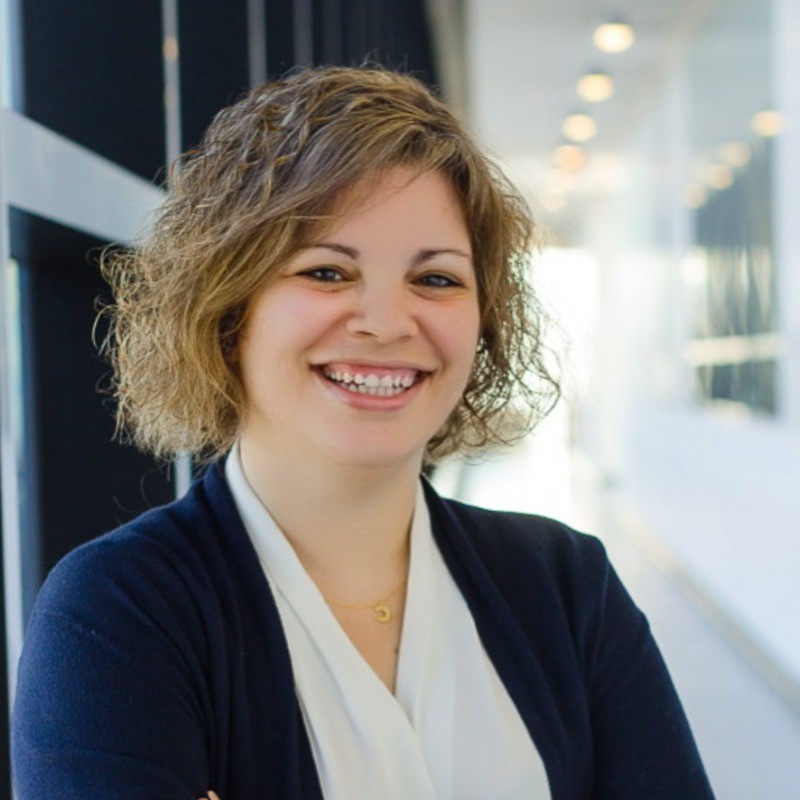
Cristina Rodríguez, PhD, Preclinical Imaging Facility Manager, UBC Molecular Imaging Research Facility (MIRF)

Cristina Rodríguez PhD

Preclinical Imaging Facility Manager Molecular Imaging Research Facility (MIRF), Centre for Comparative Medicine The University of British Columbia Vancouver, Canada
Research facility leader · Imaging scientist · Builder of research operations tools

I lead a multimodal imaging core, and I set both where it goes and how it runs.

MIRF, the Molecular Imaging Research Facility, is the University of British Columbia's small-animal in vivo imaging facility, with SPECT, PET and CT on one platform. I am responsible for the scientific direction and service model, the budget and pricing, radiation safety and animal ethics compliance, the people, and the relationships with the groups at UBC, TRIUMF, SFU, BC Cancer and BC Children's Hospital whose studies come through the door. I work alongside the facility's academic co-directors, Vesna Sossi (UBC Physics and Astronomy) and Urs Häfeli (UBC Pharmaceutical Sciences).

I am a chemist by training, an imaging scientist by trade, and I write software when the lab needs a tool that does not exist yet. I also design the figures, posters and web pages the lab puts its name to.

Leading the facility

A core facility is a small organisation. Running one means science, operations and strategy at the same time.

Direction and strategy

  • Define the service model, pricing and capacity of the facility, and where it invests next.
  • Own the budget of a fully cost-recovered facility.
  • Report to institutional and scientific oversight bodies, including TRIUMF's Life Sciences committee.
  • Build and maintain the partnerships that bring studies in: UBC, TRIUMF, SFU, BC Cancer, BC Children's Hospital.

Operations and compliance

  • Radiation safety, animal ethics protocols and institutional compliance across every study.
  • Instrument lifecycle: QC, calibration, service contracts and vendor relationships.
  • Scheduling, isotope logistics, invoicing and study documentation.
  • Supervise and train the technical team and the students and users who work in the lab.

Science and training

  • Guide investigators from study design to interpretation, so the imaging answers the question they actually asked.
  • Set the quantification methodology: calibrations, cross-calibrations, %ID/g and dosimetry workflows.
  • Lead trainer for optical imaging (Lago X) in UBC Pharmaceutical Sciences.
  • Co-instructor of PHAR 518 (Faculty of Pharmaceutical Sciences) since 2015, and lead of the facility's annual hands-on imaging workshops and one-on-one data-analysis training.
  • Advise other groups setting up imaging capacity, most recently a new microCT facility.
2014At the facility since; leading it since 2020
5Modalities I have run: SPECT, PET, CT, optical, microCT
17+Collaborating research groups supported
25Research projects supported in the latest programme report

Journey

One thread, three chapters: designing molecules to see disease, running the scanners that image them, and writing the software that measures what they show.

The facility at a glance
17+ research groups · 5 institutions 25 active projects latest report 5 modalities across 3 UBC facilities RFSG 2020 · NSERC RTI 2025 funding secured 61 peer-reviewed publications h-index 26
Credentials, in order
MSc, Chemistry UAB · 2005 PhD, Medicinal and Bioinorganic Chemistry UAB · 2009 Beatriu de Pinós Fellow 2010 to 2014 ADDF Young Investigator Scholarship 2012 WMIC MOMIL grant, imaging-facility leaders 2019 MILabs Image of the Year 2020

Cristina Rodríguez, PhD

Research facility leader · Imaging scientist · Builder of research operations tools
Preclinical Imaging Facility Manager, Molecular Imaging Research Facility (MIRF) · The University of British Columbia · Vancouver, Canada
cristina.rodriguez@ubc.ca · cristinarod2.github.io · orcid.org/0000-0002-3313-4422 · github.com/cristinarod2

Research facility leader · Imaging scientist · Builder of research operations tools. I lead UBC's small-animal in vivo imaging core, a PET, SPECT and CT facility serving research groups across UBC, TRIUMF, SFU, BC Cancer and BC Children's Hospital. I set its scientific direction and service model, own its budget and pricing as a fully cost-recovered operation, hold its radiation-safety and animal-ethics compliance, report to institutional and scientific oversight, and lead the partnerships that bring studies in. I joined the lab in 2014 and helped build it into the facility I now run; beyond MIRF, I have helped two other UBC laboratories establish optical imaging and microCT capabilities, so my operating experience spans five modalities across three facilities. What I bring is a combination that rarely sits in one person: a research scientist's judgement (PhD in medicinal chemistry, 61 peer-reviewed publications), an operator's discipline in budgets, compliance, governance and multi-partner delivery, and the ability to build the operational systems a facility needs, from standardised protocols and training to the software (LabTools) that now runs its SOPs, inventory, transfers and reporting.

Experience

Dec 2020 to present
Preclinical Imaging Facility Manager, Molecular Imaging Research Facility (MIRF)
The University of British Columbia, Centre for Comparative Medicine · alongside the facility's academic co-directors

Strategy and operating model. Define the service portfolio, pricing, capacity and investment priorities of UBC's preclinical PET, SPECT and CT core, built around a VECTor/CT system that acquires all three modalities simultaneously, serving 17+ research groups and 25 active projects. Own the budget of a fully cost-recovered facility; rebuilt its financial and activity reporting into a single ledger and benchmarked its rate card against comparable Canadian facilities.

Governance and compliance. Accountable for radiation-safety and animal-ethics compliance across every study; report to institutional and scientific oversight including TRIUMF's Life Sciences committee; manage the instrument lifecycle, QC and calibration programmes, service contracts and SOPs.

Partnerships and scientific leadership. Build the relationships that sustain the facility with investigators, departments and partner institutions; negotiate scope and resources for multi-year studies; set the quantification methodology behind 63 facility publications since 2014.

People and capacity building. Supervise and train technical staff, students and users; lead the annual imaging workshops; advised another UBC lab through its first year of a new microCT facility; lead trainer for optical imaging across Pharmaceutical Sciences labs.

Operational technology. Designed and built LabTools, the software that replaced the facility's manual processes for SOPs, isotope inventory, animal transfers and figures, now shared with other labs.

Oct 2014 to Dec 2020
Lab Manager and Research Associate, Preclinical Nuclear Imaging
The University of British Columbia

Helped build and expand UBC's preclinical PET, SPECT and CT platforms with investigators across UBC, TRIUMF and local biotech. Instrument maintenance, workflow optimization, user training, study design and scientific reporting.

2015 to present
Co-instructor, PHAR 518
UBC Faculty of Pharmaceutical Sciences
2024 to present
Optical Imaging Specialist and Lead Trainer, Lago X
UBC Faculty of Pharmaceutical Sciences, Analytical Suite

Designated trainer and technical resource for the Lago X optical imager: fluorescence and bioluminescence study design, standardized acquisition and analysis protocols, troubleshooting across labs.

2024 to 2025
microCT Imaging Advisor (MILabs)
The University of British Columbia

Advised a UBC lab establishing a new MILabs microCT facility through its first year: site setup, workflow and operational practice.

Jul 2010 to Oct 2014
Beatriu de Pinós Postdoctoral Fellow, Medicinal Chemistry
The University of British Columbia. Independently funded; led the project

Designed, synthesized and evaluated small-molecule radiotracers for theranostic applications in Alzheimer's disease: live-cell assays, protein binding and aggregation, enzyme inhibition, cytotoxicity and structure-based design.

Oct 2013 to Oct 2014
Computer-Aided Drug Design Researcher
UBC Faculty of Pharmaceutical Sciences

Homology modelling, virtual screening, docking and binding free-energy prediction to identify novel agonists of the Cannabinoid Receptor 2.

Sep 2005 to Sep 2009
Professora Ajudant (Assistant Lecturer)
Universitat Autònoma de Barcelona (UAB), Department of Chemistry

Full-time teaching appointment (undergraduate lectures and laboratory courses) held throughout the doctorate, which was carried out in the UAB Department of Chemistry with collaborations and research stays at ICMAB-CSIC and IQS Barcelona.

Mar to Jul 2007
Visiting Researcher, IQS Barcelona
Amyloid-disease research

Characterization of amyloid-β, amylin and transthyretin and their interactions with small-molecule drug leads.

Feb 2004 to Jun 2006
Visiting Researcher, ICMAB-CSIC
Radiochemistry

Synthetic strategies for incorporating iodine-123 into small molecules for in vivo imaging; synthesis and characterization of metal complexes.

Feb to Jul 2003
Analytical Chemist
Ingeniería Analítica S.L.

Analytical methods for drugs, biogas, polymers and fragrances by HPLC, GC and GC/MS.

Selected initiatives

Sustainability
Making a cost-recovered facility legible to leadership

Unified financial and activity reporting with calendar- and fiscal-year views, and pricing benchmarked against comparable Canadian facilities.

Operations
Reproducible, quantitative imaging

Built the QC, calibration and cross-calibration programmes, training and documentation that make MIRF's PET, SPECT and CT results consistent from study to study and from user to user, so investigators can publish quantitative data from the facility with confidence.

Capacity
Five modalities across three facilities

Carried that operating model to two other UBC laboratories: an optical imaging platform (fluorescence and bioluminescence, in vivo and ex vivo) where I became lead trainer, and a new microCT facility (below 20 µm resolution, for ex vivo skull and dental specimens and in vivo mice) which I advised through its first year.

Technology
LabTools

Replaced folders of Word files, spreadsheets and email threads with purpose-built tools for SOPs, isotope inventory, animal transfers and figures; now shared openly with academic labs.

Education

2005 to 2009
PhD, Medicinal and Bioinorganic Chemistry (Excel·lent cum laude, the highest doctoral grade)
Universitat Autònoma de Barcelona (UAB), Spain

Drug-like molecules as candidate radiotracers for Alzheimer's disease: target validation, metal-protein titrations, circular dichroism and fluorescence assays, chemoinformatics pipelines for library triage.

2003 to 2005
MSc, Chemistry (Matrícula d'Honor, highest distinction)
Universitat Autònoma de Barcelona (UAB), Spain

Funding and recognition

2025
NSERC Research Tools and Instruments award
$145,000 to upgrade two core instruments at MIRF
2020 to 2021
UBC Research Facilities Support Grant
Institutional support for shared platform operations
2020
MILabs Image of the Year, Laboratory Award
For imaging work under the program
2019
WMIC MOMIL grant, Managers of Molecular Imaging Labs
World Molecular Imaging Congress, Montreal · awarded to leaders of small-animal imaging facilities
2010 to 2014
Beatriu de Pinós Fellowship
Competitive independent postdoctoral funding, one of four in the Science panel, held at UBC
2012
ADDF Young Investigator Scholarship
Alzheimer's Drug Discovery Foundation
2012
ScienceDirect Top 25 most-downloaded article
Coordination Chemistry Reviews
2005, 2007
First-prize research communication awards
Bioinorganic Scientific Meeting, Barcelona · ICBIC, Vienna

Invited lectures

2024
Introduction to Optical Imaging in Research
MBF and CDM Annual Meeting, The University of British Columbia
2020
Imaging with a SPECT/CT System: Seeing is Believing
International Laboratory Animal Technician Week, Vancouver
2019
Dual Labelling and SPECT Imaging of a Drug and its Delivery System Concurrently
Canadian Society for Pharmaceutical Sciences, Richmond, BC
2016
Keynote: Preclinical Imaging in Research and Innovation. Current Trends
4th Meeting of the Faculty of Chemical Engineering (CONFIQ-4), Mérida, Mexico

Professional service

2015 to present
Organizing committee, International Conference on the Scientific and Clinical Applications of Magnetic Carriers
Biennial meeting; most recent edition ~330 participants
Ongoing
Peer reviewer for ACS and RSC journals
Molecular BioSystems, MedChemComm, Metallomics, Medicinal Research Reviews, ACS Chemical Biology
Translation
Scientific translator of The Elements (Theodore Gray) into Catalan
240 pages · Black Dog & Leventhal, New York

Publications

2009
Design, Selection, and Characterization of Thioflavin-Based Intercalation Compounds with Metal Chelating Properties for Application in Alzheimer's Disease
Journal of the American Chemical Society · doi:10.1021/ja806062g
2010
Crystal structure of thioflavin-T and its binding to amyloid fibrils: insights at the molecular level
Chemical Communications · doi:10.1039/b912396b
2012
The art of building multifunctional metal-binding agents from basic molecular scaffolds for the potential application in neurodegenerative diseases
Coordination Chemistry Reviews · doi:10.1016/j.ccr.2012.03.008
2017
An Eighteen-Membered Macrocyclic Ligand for Actinium-225 Targeted Alpha Therapy
Angewandte Chemie International Edition · doi:10.1002/anie.201709532
2017
Multi-isotope SPECT imaging of the 225Ac decay chain: feasibility studies
Physics in Medicine & Biology · doi:10.1088/1361-6560/aa6a99
2018
H4octox: Versatile Bimodal Octadentate Acyclic Chelating Ligand for Medicinal Inorganic Chemistry
Journal of the American Chemical Society · doi:10.1021/jacs.8b09964
2020
Monosized Polymeric Microspheres Designed for Passive Lung Targeting: Biodistribution and Pharmacokinetics after Intravenous Administration
2025
Liposomal lipid nanoparticles for extrahepatic delivery of mRNA
Nature Communications · doi:10.1038/s41467-025-04135-8
2025
Quantitative dual-isotope preclinical SPECT/CT imaging and biodistribution of the mercury-197m/g theranostic pair with [197m/gHg]HgCl2 and a [197m/gHg]Hg-tetrathiol complex as a platform for radiopharmaceutical development
EJNMMI Radiopharmacy and Chemistry · doi:10.1186/s41181-025-00391-2
2007 to 2026
61 peer-reviewed publications · h-index 26 (Google Scholar, Sept 2026)
Selected papers above · complete list in the Publications section · Google Scholar · ORCID 0000-0002-3313-4422

Research

Making what happens inside a living system measurable, reproducible, and useful for developing new radiopharmaceuticals and therapies.

Quantitative molecular imaging

Rigorous quantification across PET, SPECT and CT: calibration, standardized workflows, and the methodology that makes imaging numbers trustworthy.

Radionuclide theranostics

Method development for emerging theranostics, including dual-isomer Hg-197m/g SPECT imaging, kinetic modelling and image-guided dosimetry.

Longitudinal preclinical studies

Multi-time-point in vivo and ex vivo workflows that track biology over time with consistency and statistical power.

Translational imaging and dosimetry

Bridging preclinical imaging and quantitative analysis to support drug development, moving molecules toward medicines.

61peer-reviewed publications Selected papers and the complete list

Publications

From the bench to the scanner: molecules for neurodegenerative disease, then the imaging that measures them.

61Peer-reviewed publications
2007–26Years publishing
42Journals
5Research themes

Selected papers the turning points

Complete list filter by theme, year or keyword; every entry links to its DOI

LabTools, a side project

Every tool here started as a bottleneck in the facility I run. Several are free for academic and research groups, and all are free to try.

See the full showcase

LabTools

LabTools is an independent initiative and, at the same time, the operational technology of the facility I run: the software I write when the facility needs something that does not exist yet. The tools range from quantitative image analysis and instrument calibration to SOP management and inventory. Most are single HTML files that run entirely on your own computer, with nothing sent anywhere; several are open source on GitHub.

3D Slicer module

MIRA

Multimodal Imaging Render and Animation: publication-grade figures and animations from preclinical SPECT, PET and CT, built on 3D Slicer.

Coming soonLearn more
Figure composer, in-browser

MOSAIC

Standardizes preclinical imaging figures: row by time-point grids, reference colour bars, consistent typography and journal-ready export.

100% localLearn more
Imaging visualization

SpectraViewer

Interactive viewing of multi-dimensional imaging data: volumes, spectra and time series side by side.

AcademicCase study soon
Kinetic modelling, Python

HgQuant

Models the decay of the Mercury-197 isomers with Bateman equations, for dual-isomer SPECT theranostics and image-guided dosimetry.

Open sourceGitHub
Operations and compliance

RadioInventory

Tracks radioactive isotopes, decay and usage across the facility, keeping inventory and QC records audit-ready.

AcademicCase study soon
SOP lifecycle, in-browser

SOP Manager

Structured authoring with auto-numbered steps, branded templates, Draft to Active to Retired version control, and a searchable library that exports Word and PDF.

100% localView demo
Web portal, operations

Rodent Transfer Portal

Submit, track and document animal transfers between facilities, replacing email and paper with an auditable record.

Open sourceGitHub
Lab inventory, database

Antibody DataBank

A lightweight database for antibody stocks, suppliers, lots and validation details, so reagents are easy to find and reorder.

Open sourceGitHub
Document templates

FolioLab

Branded templates for lab reports, protocols, user manuals and manuscripts, so routine paperwork starts consistent.

AcademicLab toolkit

Some of these tools are still in testing or nearly ready for release. Source for the open ones is on github.com/cristinarod2.

Get in touch

Let's work together

Whether you are planning an imaging study, setting up a facility, or want to bring LabTools into your lab, I would be glad to talk.